Understanding music is like deciphering a cosmic language. Among its many dialects, jazz and classical music stand tall, bearing the weight of musical tradition and innovation. In this post, we’ll explore these two music genres, delving into their characteristics, intersections, and mutual influences.
Jazz: The Sound of Freedom
Born in the heart of New Orleans in the early 20th Century, Jazz is a blend of African and Western music traditions. It is defined by its emphasis on individual expression, improvisation, syncopation and the swing note. Jazz musicians like Louis Armstrong, Duke Ellington, Miles Davis, and Ella Fitzgerald are remembered as some of the suitable torchbearers of this genre.
Classical: The Language of Elegance
In contrast, Classical music finds its origins in Western liturgical and secular music, gaining prominence in the period from the 1750s to the 1820s. Its defining features include the use of symphony and harmony, carefully composed pieces and strict musical forms. The leading figures like Ludwig van Beethoven, Wolfgang Amadeus Mozart and Franz Schubert are synonymous with this genre.
When Jazz meets Classical
While both genres may seem disparate, there are several fascinating intersections. Both jazz and classical music value high levels of musicianship and technical proficiency. More importantly, they have consistently influenced each other over time. For instance, George Gershwin, a popular 20th-Century composer, famously blended jazz elements in his classical compositions. On the other hand, jazz adaptations of classical pieces have also introduced a refreshing twist to traditional tunes.
The Echoes of Time
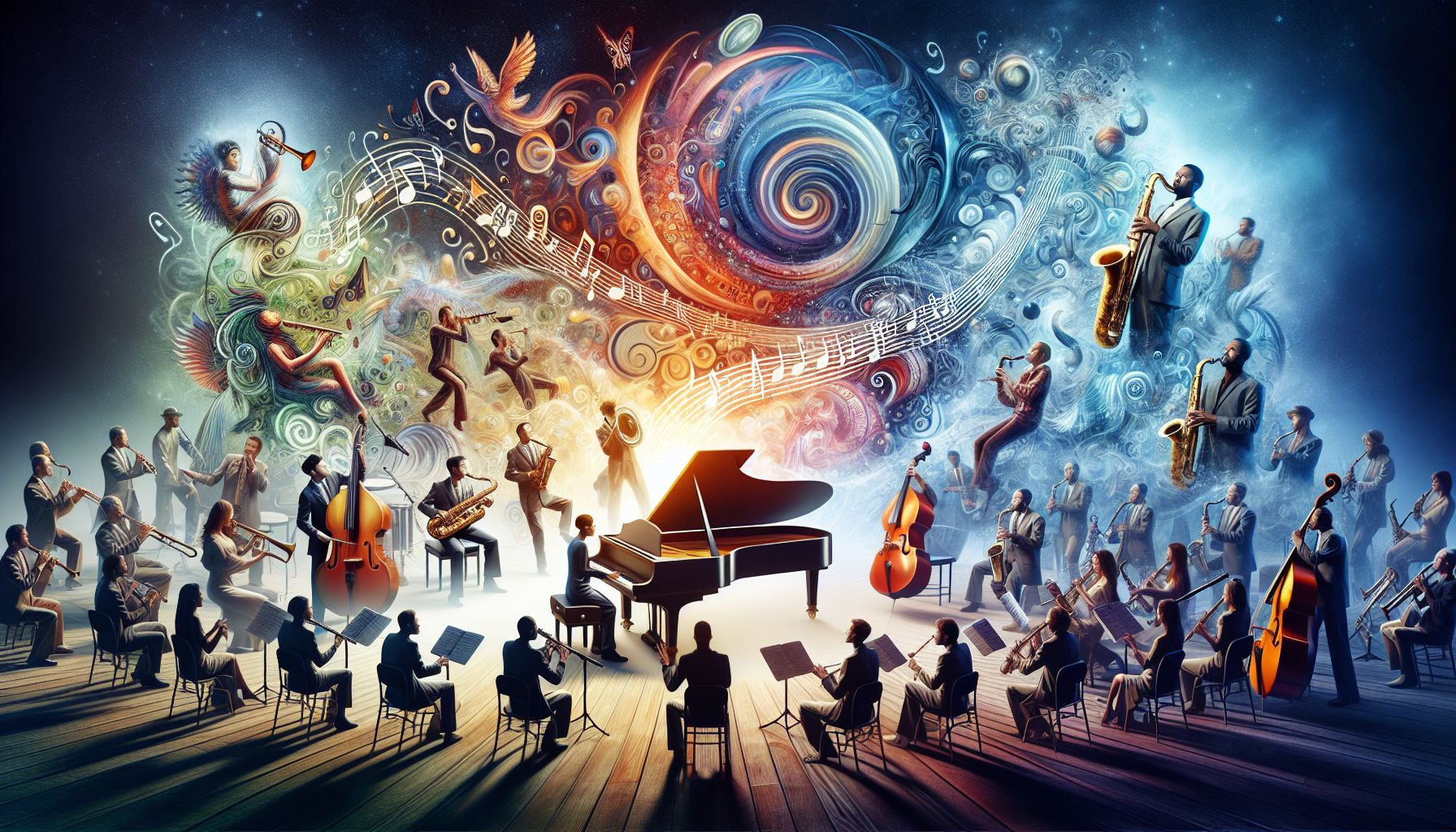
It’s fascinating to note how classical music and jazz have borrowed elements from each other to create new subgenres like jazz fusion and third stream music. They echo the malleability of music and its potential to transcend boundaries.
To summarize, Jazz and Classical music are two diverse genres with unique traditions and motifs. However, they intersect in more ways than one—through their dedication to musical proficiency, their ability to influence each other, and their potential to transform traditional norms. The exploration of such intersections enhances our understanding of music and allows for new possibilities in composition and performance. Hence, jazz and classical music are more than distinct genres; they are harmonic unions of the old and the new, the tradition and the innovation.